Introduction: The link between gender equality and nature
The linkages between gender equality and nature are profound and multifaceted. Across landscapes and seascapes, women play diverse and essential roles in managing, conserving, and stewarding natural resources: restoring forests, protecting watersheds, sustaining agrobiodiversity, and supporting community resilience. Nearly one-third of women’s employment is concentrated in agriculture, forestry, and fisheries, yet their contributions remain widely unrecognized and undersupported.
At the same time, the world is struggling to mobilize the level of financing needed to meet international targets on biodiversity, land restoration, and climate change.
The global biodiversity finance gap
According to the UNEP State of Finance for Nature report, the world faces a USD 4.1 trillion gap in the resources needed to meet global targets by 2050. Bridging this gap requires investments that are inclusive, equitable, and effective in mobilizing capital at scale, and it also means using resources as efficiently as possible – meeting multiple goals at once. That is not possible without a gender lens.
Why gender barriers weaken conservation outcomes
Despite women’s vital roles, they often lack secure land rights, access to finance, and meaningful representation and influence in decision-making processes, which then has a cyclical effect, intensifying their exclusion and risks to livelihoods, food, and land security. On the other hand, women’s stewardship, solutions, and equitable participation in natural resource governance are clearly linked to better environmental outcomes, more local ownership, and sustainability.
Financial institutions and mechanisms have power - they can enable new approaches that close gaps, but they can also reinforce inequality. For example, a conservation scheme that pays landowners may exclude women if they don’t hold formal land titles, or a reforestation project might unintentionally exclude women if it overlooks their unpaid workload or fails to offer childcare at training sites. This can, in turn, lead to lower uptake of conservation practices, less durable biodiversity outcomes, and overall less impactful environmental benefits.
Integrating gender equality into biodiversity finance is therefore not optional; it is critical for ensuring that conservation efforts deliver lasting social, economic, and environmental gains.
Gender-responsive biodiversity finance directly advances the 2030 Agenda for Sustainable Development by reinforcing progress across multiple goals -particularly SDG 5 on gender equality- while strengthening biodiversity and climate outcomes (SDG 13, 14, 15), an increasingly urgent priority as countries approach the 2030 deadline.
Global commitments driving action

What Is a Gender-Responsive Biodiversity Finance Solution?
A biodiversity finance solution is a set of activities, mechanisms, and/or instruments that address a specific biodiversity challenge and generate financial, policy, and institutional results to solve an environmental problem.
A gender-responsive biodiversity finance solution is designed and implemented to identify gendered barriers and gaps and take steps to overcome them, toward delivering results for biodiversity as well as for women’s empowerment and gender equality.
Such solutions:
- enable equal access to resources, opportunities, and rights
- ensure meaningful and equitable participation and leadership
- strengthen secure access to and governance of land and natural resources
- support fair sharing of benefits
Example:
A payment scheme for restoring degraded land becomes gender-responsive when women -who may not hold formal land titles -can still participate and benefit through recognition of customary rights, targeted payments, or adjusted participation requirements.
Using the Biodiversity Finance Plan as an entry point
The Biodiversity Finance Plan (BFP) guides the implementation of optimal finance solutions to reach national biodiversity targets. It engages public institutions, the private sector, and civil society, and aims to generate revenues, realign expenditures, deliver better results, and avoid future costs.
A gender-responsive biodiversity finance solution, using the BFP as an entry point, will aim to deliver on three results:
- Promote equal opportunities and rights for women and men in all their diversity. Finance solutions eliminate discrimination and ensure all genders can equally benefit from biodiversity finance.

- Ensure meaningful participation and leadership in decision-making: Finance solutions guarantee full, meaningful participation and leadership opportunities for women and underrepresented groups in their design, governance, and implementation.

- Strengthen and secure access to land, natural resources, and benefits: Finance solutions strengthen women’s rights and secure tenure over land, water, forests, and other resources, enabling sustainable practices and equitable benefit-sharing

No ‘one size fits all’: Country-driven Gender-Responsive Biodiversity Finance Solutions that deliver multiple results
A gender-responsive biodiversity finance solution can take many forms, adapted to national contexts
Access to Finance
Tailored credit schemes reduce collateral requirements and provide capacity-building to support women-led nature-positive enterprises. They enable women to invest in sustainable livelihoods such as eco-tourism, while strengthening their economic empowerment.
Carbon Markets
Projects can secure women’s land tenure, ensure participation in decision-making, and enable equitable benefit-sharing.
Biodiversity Credits
Emerging markets can integrate gender equality considerations and safeguards from the outset.
Payments for Ecosystem Services (PES)
Compensation for women conserving forests, land and watersheds strengthens both livelihoods and ecosystems
Budget tagging
Gender-responsive budget tagging helps governments track how biodiversity expenditures support equality outcomes
Biodiversity enterprise funds
Seed capital and technical assistance for women-led biodiversity enterprises expand access to sustainable livelihoods. - for example, supporting women in buffer zones of protected areas, biological corridors, and Indigenous territories of high biodiversity value.

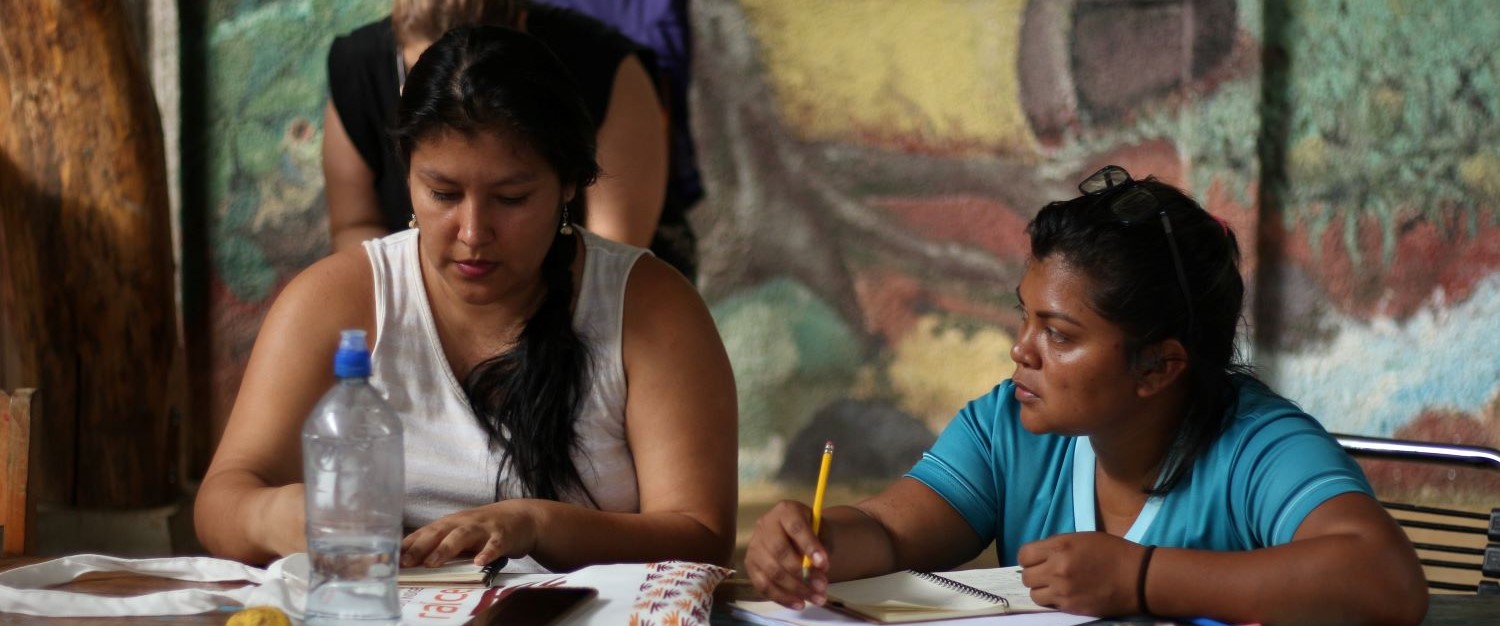
Elizabeth Ramirez Gonzalez and Andrea Rojas Cruz, participants of BIOFIN’s online course on natural cosmetics from Costa Rica. Photo: UNDP BIOFIN, 2022
Key Considerations to Develop a Gender-Responsive Biodiversity Finance Solution
Developing a gender-responsive biodiversity finance solution begins with inclusive stakeholder engagement. It is essential to meaningfully involve institutions working on gender, such as the Ministry of Women’s Affairs, as well as women’s groups, NGOs, and civil society organizations in the biodiversity finance planning process. Their participation ensures that gender priorities are embedded in the design, implementation and monitoring of biodiversity finance solutions.
Gender analysis is key to identify existing gaps, inequalities, and opportunities within biodiversity-related sectors. This includes examining how the national biodiversity strategy and action plan (NBSAP) integrates gender aspects and aligning biodiversity finance efforts with the national gender policy or women’s empowerment strategy.
Engaging gender expertise throughout the process strengthens the quality and credibility of the analysis, while building ownership among national ministries, particularly those responsible for environment and finance, ensures sustainability beyond the project cycle.
Country experience shows that early integration matters. For example, Bhutan updated NBSAP, introducing dedicated targets and actions to institutionalize gender-responsive approaches supported by national women´s institutions and local women leaders, helping ensure more inclusive and equitable conversation outcomes in the NBSAP update processes.
Stay tuned for BIOFIN’s Global Gender Guidance, which is being developed to provide practical steps and examples to make biodiversity finance solutions more inclusive and transformative.
Why this matters – leveraging gender-responsive biodiversity solutions can accelerate development gains
Gender responsive biodiversity finance solutions can really help overcome chronic gender barriers while delivering multiple development outcomes. When anchored in national priorities and aligned objectives, these solutions enable countries to use scarce resources more efficiently, advancing biodiversity goals alongside gender equality, climate resilience, and inclusive economic development.
Addressing structural barriers faced by women, such as limited access to finance, time poverty, and exclusion from decision-making, biodiversity finance can be a catalyst for both gender equality and environmental outcomes. For example, investments in clean cooking reduce fuelwood demand, improving women’s health and livelihoods while alleviating pressure on forests and ecosystems. Similarly, in remote areas, digital financial solutions tailored to biodiversity-relevant sectors can expand women’s access to capital for nature-positive enterprises, supporting sustainable livelihoods and reducing reliance on environmentally degrading activities.
The enabling environment to scale this approach is already in place. Major bilateral donors and global environment and climate funds require gender integration through dedicated policies and action plans. Gender responsive biodiversity finance solutions translate these policy commitments into practice by implementing gender equality within concrete finance mechanisms. Stay tuned for more guidance on how to integrate gender equality into National Biodiversity Finance Plans under BIOFIN.
Stay tuned for BIOFIN’s Global Gender Guidance, which is being developed to provide practical steps and examples to make biodiversity finance solutions more inclusive and transformative.

